
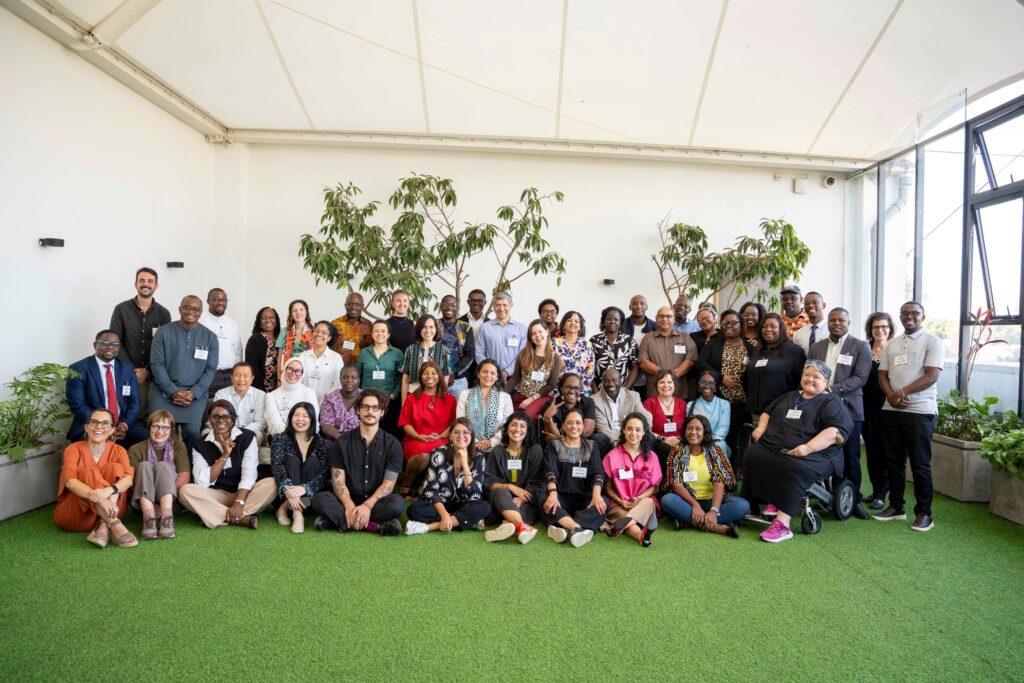
The Weaving Resilience Community Gathering in Nairobi, held August 25-27, 2026, marked the end of a five-year initiative and the launch of a permanent South-South learning community. This milestone affirmed a shift from a time-limited project to a self-sustaining community while honoring the initiative’s legacy, addressing emerging geopolitical threats, and developing strategies for the future. Representing the KICTANet Tatua Digital Resilience Center, Mwendwa Kivuva and John Gathii joined peers from Africa, Latin America, and Southeast Asia to plan for sustaining the community.
A Hostile New Reality
Civic space is shrinking worldwide, and threats to civil society have increased since the last gathering in Accra in 2025. This shift is visible across East Africa, where authoritarian actors use surveillance tools, cybercrime laws, and illegal groups to suppress political opposition. Kenya faces online harassment, kidnappings, and police abuses, while Tanzanian activists encounter treason charges and election crackdowns. Uganda employs militarism, arbitrary arrests, and organizational suspensions to silence dissent. These repressive tactics also cross borders, with states targeting and deporting activists.
In Latin America, governments consolidate authoritarian rule, enact restrictive regulations, and force journalists and human rights defenders into exile. These pressures also intersect with foreign interference, environmental degradation, and ties between military forces and authoritarian regimes. In Southern Africa and other regions, civil society faces a severe funding crisis, alongside increasing polarization and anti-rights sentiment.
Adapting with Radical Solidarity
In response to these challenges, Weaving Resilience partners are adapting their strategies to strengthen resilience. Across regions, organizations form strategic partnerships, develop peer-learning communities, and build transnational networks to protect social justice and leaders. They also use online platforms for training, awareness, and needs assessments to tailor local responses. Activists are prioritizing youth-led movements, recognizing that youth are the majority of frontline defenders in countries like Kenya. The community is also integrating care, compassion, and mental health support into its core operations.
To address funding contractions, hubs are diversifying income streams, exploring social enterprise models, and building partnerships with local philanthropists.
Five Years of Unmatched Global Impact
The community’s strategies rest on a strong five-year foundation that proved locally grounded, Global South-led capacity building is effective. Between 2022 and 2025, the initiative served over 44 countries and generated 39,174 interactive organizational touchpoints, reinforcing the model now being carried forward as a permanent community.
The Role of KICTANet Tatua Digital Resilience Centre
KICTANet’s Tatua Digital Resilience Centre supports civil society organizations, human rights defenders, and vulnerable communities in identifying digital risks and taking practical steps to mitigate them. Through digital security support, capacity building, incident response, and tailored guidance, the Centre helps organizations protect accounts, devices, data, communications, and online activities.
Tatua recognizes that digital incidents can quickly escalate into serious physical, legal, or reputational threats. The Centre connects technical protection with the broader needs of civic actors, helping them prepare, respond, and recover effectively. By providing accessible, context-sensitive, and human-centered support, Tatua enables organizations to shift from reactive responses to proactive preparedness.
For Kenyan organizations, this means access to rapid incident response, context-specific digital security training, and peer referrals across the hub.
The Road Ahead: From Initiative to Community
As formal funding cycles conclude, the infrastructure, localized methodologies, and trust developed over the past five years remain embedded within the hubs. The 39,174 organizational interactions now support a continuing, self-sustaining ecosystem, underscoring the move from initiative to permanent community.
Looking ahead, the community is prioritizing radical solidarity, mutual peer learning, and ecosystem coherence. In practice, Global South leaders share technical resources, develop joint projects, and support each other during crises, keeping civil society resilience strong and self-directed.
This transition means civil society actors no longer rely solely on external funding. Instead, they depend on trusted relationships, shared knowledge, and collective action that endure beyond individual projects. Resilience is built through relationships, skills, care, technology, solidarity, and a community network prepared for future challenges.
